Chicken Road Review and Playing Tips
Since April 2026, the Remote Gaming Duty rose to 40 per cent — operators pay it, not you, but it shapes which games get pushed and how bonuses shrink. Chicken Road sits in a category that's simpler to host than live dealer tables and cheaper to license than branded slots, so you'll see it on the lobby more often than you might expect.
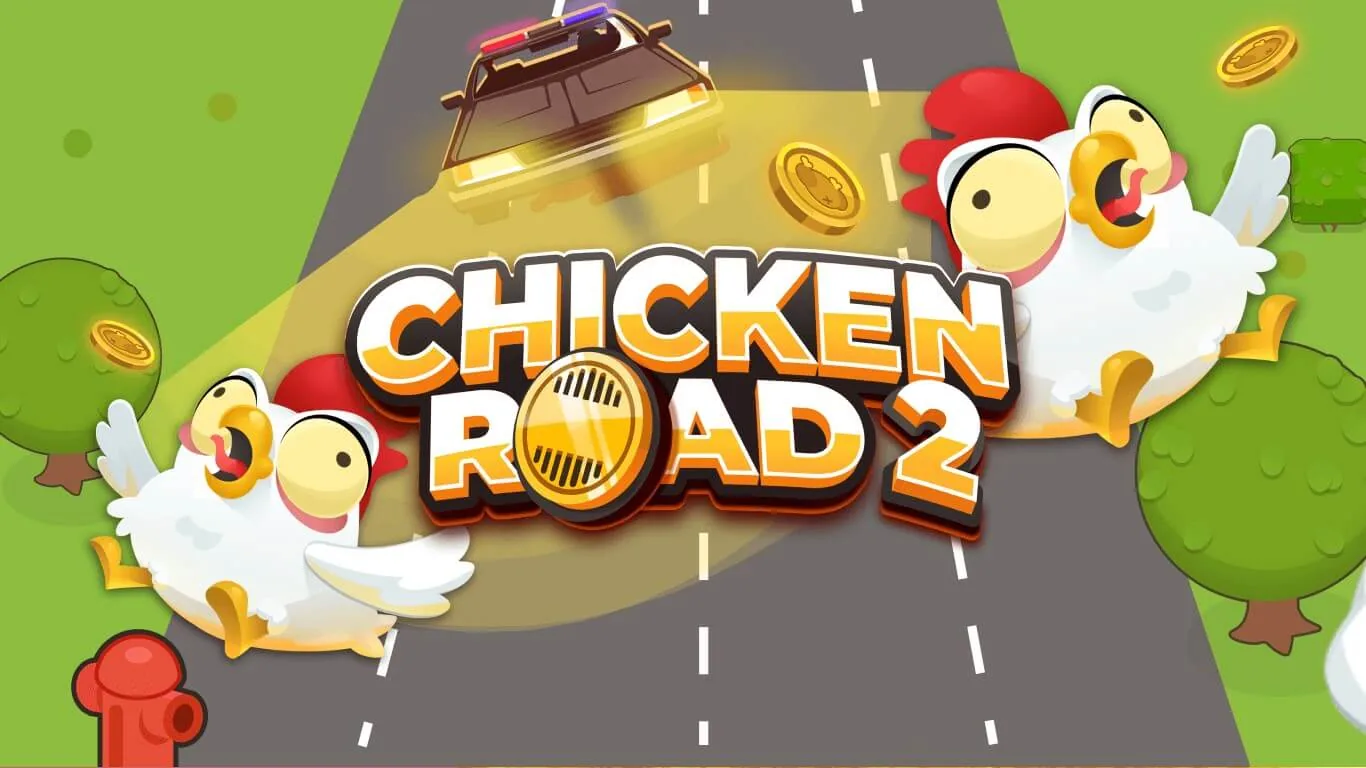
It's InOut's take on the road-crossing format: a chicken walks lane by lane, each step multiplies your stake, cars appear randomly, and you cash out before you're hit. The hook is four difficulty settings — more lanes mean lower risk but slower multiplier growth, fewer lanes mean faster climbs and more frequent losses. That choice alone makes it different from fixed-RTP crash games where variance is baked in and you can't dial it.
What sets it apart from the usual crash lineup
Most crash games give you a single curve and a single RTP — Aviator, JetX, Spaceman all work that way. Chicken Road splits into four modes, and each mode changes the lane count, which changes how often cars spawn and how fast the multiplier grows. Easy mode stretches 30 lanes, Hardcore compresses it to 18. The RTP stays constant across modes — it's in the provider's cert sheet — but the feel is completely different.
Easy mode: you cross more lanes before hitting the same average multiplier, so sessions feel longer and calmer. Hardcore: fewer safe steps, multiplier jumps faster, losses bunch together. If you've played Plinko with 8 pins versus 16, it's the same principle — more steps smooth the ride, fewer steps spike it.
The second difference is visibility. In Aviator, the plane flies and you see a number. Here, you see the chicken, the lanes, the cars. It's slower to parse at first, but some players find it less abstract — you're watching a thing cross a road, not a graph climbing. Whether that's better is personal taste; if you prefer clean numbers, this will feel cluttered.
The £5 cap and what it does to your session budget
Every UKGC-licensed site enforces a £5 maximum stake per spin or bet round for slots and instant games. If you're 18 to 24, that cap drops to £2. Chicken Road's internal maximum is £200, but you'll never see it — the platform software stops you at £5 or £2 depending on your age verification record.
That ceiling changes how you plan a session. If you want to play 100 rounds, you need £500 in your account to bet £5 each time — and that assumes zero wins along the way, which won't happen. A more realistic budget for 100 rounds at £5 is £200 to £300, because you'll cash out winners and lose others, and the net drain is slower than the gross stake total.
The 1 to 2 per cent rule from poker bankroll guides still applies: your single bet should be 1 to 2 per cent of your session bank. If you bring £100, that's £1 to £2 per round. At £5 per round, you'd want £250 to £500 in the account. Most players don't run that calculation and end up with 20 to 40 rounds before the balance drains, then they deposit again and trip the affordability check threshold faster. Knowing the maths beforehand means you size the deposit correctly from the start.
How the difficulty modes feel in practice
Easy mode is the least stressful but also the least rewarding in the short term. You'll cross 10, 15, 20 lanes regularly, cashing out at 1.8× or 2.2× feels routine, and losses are rare enough that you forget the game has teeth. The problem is complacency — you stop cashing out early, you push for one more lane, and when the car finally comes, it wipes three or four wins at once.
Medium and Hard sit in the middle. Medium gives you 25 lanes, Hard gives you 22. You'll notice more frequent losses, but the multiplier climbs faster, so a good run to lane 12 or 15 pays better than the same visual progress in Easy. The sweet spot for most players is Medium — it's volatile enough to feel like a game, stable enough that you're not reloading every five rounds.
Hardcore is 18 lanes. The chicken rarely makes it past lane 10 without getting hit. Multipliers grow fast, but so do losing streaks. If you're testing Hardcore, expect to lose four or five rounds in a row, then hit one 3× or 4× winner that recovers half the damage. It's not broken — it's high variance doing what high variance does. Some players love it for the quick resolution, others find it frustrating because the modal outcome is loss, not win.
- Easy: 30 lanes, safest, slowest multiplier growth, best for long sessions with small stakes.
- Medium: 25 lanes, balanced risk and reward, most common choice.
- Hard: 22 lanes, faster multiplier, more frequent losses, suits experienced players.
- Hardcore: 18 lanes, highest volatility, expect streaks of losses broken by occasional big wins.
The strategies that don't work and why
Every crash-style game attracts pattern-spotting. Players watch ten rounds, see three losses in a row, then bet big on the assumption the next round «must» go longer. It doesn't. Each round is independent — the RNG doesn't know or care what happened before. Betting more after losses (Martingale) only drains your balance faster when the next round also loses, and with the £5 cap, you can't double past a few steps anyway.
The «cash out at 2× every time» strategy sounds disciplined, but it's not a strategy — it's a target. If the game's RTP is 97 per cent and you always cash at 2×, you'll hit that target roughly 48 to 50 per cent of the time (depending on mode), and lose the other half. Over 100 rounds, you're still down 3 per cent of total stakes on average. The target doesn't create an edge; it just makes the loss curve smoother and less swingy.
Some players switch modes mid-session, moving to Hardcore after a losing streak in Easy, hoping the higher volatility will recover losses faster. What actually happens: Hardcore's higher variance means longer losing streaks are more common, and you burn through the remaining balance before a winner lands. Mode-switching doesn't reset the RNG or improve your odds — it just changes the distribution of outcomes, and usually in a way that feels worse when you're already tilted.
Stopping rules and why you need them before you start
Set two limits before the first bet: a loss limit (the amount you're willing to lose) and a win target (the amount that, if you reach it, you stop). For example, deposit £100, set a loss limit of £100 (if the balance hits zero, you're done) and a win target of £50 (if you reach £150, you cash out and leave). These numbers are arbitrary — pick what suits your budget — but the structure isn't. Without pre-set limits, you'll chase losses or give back wins, because the game never tells you to stop.
Loss limits are easier to enforce because the platform can do it for you — UKGC sites let you set daily, weekly, or monthly deposit caps in your account settings. Once you hit the cap, the system blocks further deposits until the period resets. That's a hard stop. Win targets require self-discipline because the site won't log you out for winning. The best enforcement is withdrawing the profit immediately: if you reach £150, withdraw £50, leave £100, keep playing only with the original stake.
The psychological trap is the «one more round» loop. You're up £40, you want £50, you lose £10, now you're at £30 and you want to get back to £40, then back to £50, and an hour later you're at zero wondering what happened. The rule that fixes it: when you hit your win target, stop for at least 30 minutes. Walk away, make tea, do something else. If you still want to play after the break, fine — but the break itself interrupts the loop and gives you a chance to reassess whether you're playing for fun or chasing a number that keeps moving.
Why losing streaks are normal and what to expect
In any game with RTP below 100 per cent, losing streaks aren't a malfunction — they're a statistical certainty. Chicken Road's RTP is around 97 per cent (varies slightly by mode, check the paytable in-game), which means for every £100 wagered, the game returns £97 on average. That 3 per cent house edge doesn't come from every round costing you 3p; it comes from clusters of losses that outweigh clusters of wins.
A streak of five losses in a row happens roughly once every 20 to 30 rounds in Medium mode, more often in Hardcore, less often in Easy. When it happens, it doesn't mean the game is «tight» or «cold» — it means you're seeing the normal variance of a random process. The instinct is to bet bigger to recover, but that's when the damage multiplies. If you lose five rounds at £2 each, you're down £10. If you then bet £5 and lose, you're down £15, and you've just made the problem worse.
The best response to a losing streak is to shrink your stake or stop entirely. Drop from £5 to £1, play ten rounds at the lower size, see if the variance evens out. If it doesn't, take a break. The RNG doesn't «owe» you a win, and betting more doesn't make one arrive faster. Over thousands of rounds, the RTP converges to 97 per cent, but in any given session of 50 or 100 rounds, you can easily finish 10 per cent down or 10 per cent up. That's how variance works — short-term results are noisy, long-term results are predictable, and no short-term result predicts the next one.
FAQ
Can I play Chicken Road in demo mode before betting real money?
Most UKGC-licensed sites offer demo play, but you'll need to register and verify your age first — free play is usually locked behind login to comply with age-check rules. Demo mode uses the same RNG and RTP as real-money play, so it's a useful way to learn the controls and test difficulty modes without risking your balance. Just remember that demo play doesn't trigger the same emotional reactions as real money, so it won't fully replicate how you'll feel when your own £50 is on the line.
How long does it take to withdraw winnings from Chicken Road?
Withdrawal speed depends on the payment method and whether you've completed KYC. E-wallets like PayPal process in a few hours to 24 hours. Faster Payments to your bank account takes same-day to two working days. Debit card withdrawals take one to three working days. Your first withdrawal will take longer — 24 to 48 hours is normal — because the operator needs to verify your identity documents. After that, subsequent withdrawals are faster. The withdrawal itself is free; the operator pays the processing cost.
Is it better to play Easy mode for longer sessions or Hardcore for bigger multipliers?
Neither is «better» — it depends on what you want from the session. Easy mode gives you more rounds per £100 because you lose less often, so it's better if you want the session to last longer and you don't mind smaller, steadier wins. Hardcore mode gives you bigger multipliers when you do win, but losses come faster, so your balance swings harder and sessions are shorter. If you're testing the game for the first time, start with Medium — it's volatile enough to be interesting, stable enough that you're not reloading every ten minutes. Once you know how the game feels, pick the mode that matches your tolerance for swings.